An asphalt plant is an industrial system used to produce hot mix asphalt by combining aggregates, mineral filler, bitumen, and other additives at controlled temperatures and proportions. Asphalt plants are essential for road construction, highways, bridges, airport runways, and infrastructure projects.
What Is an Asphalt Plant?
An asphalt plant is designed to heat, dry, screen, proportion, mix, and discharge aggregates with bitumen to create a consistent asphalt mixture.
Depending on the production method, asphalt plants are mainly classified into:
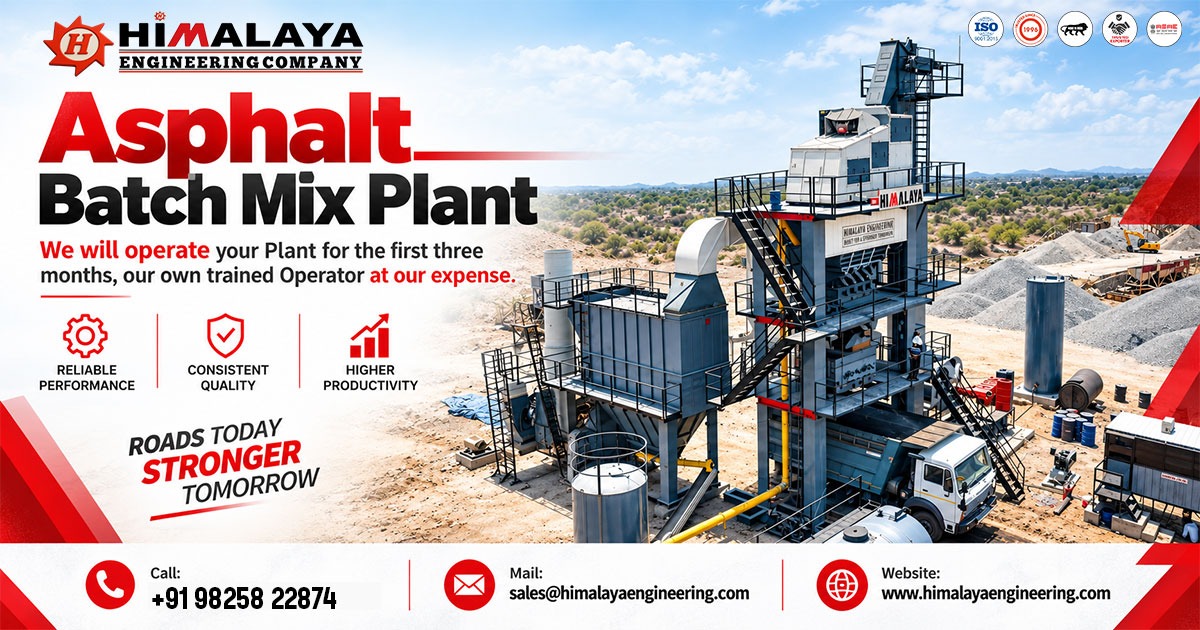
- Batch Mix Plant – Produces asphalt in individual batches with precise proportioning and mixing.
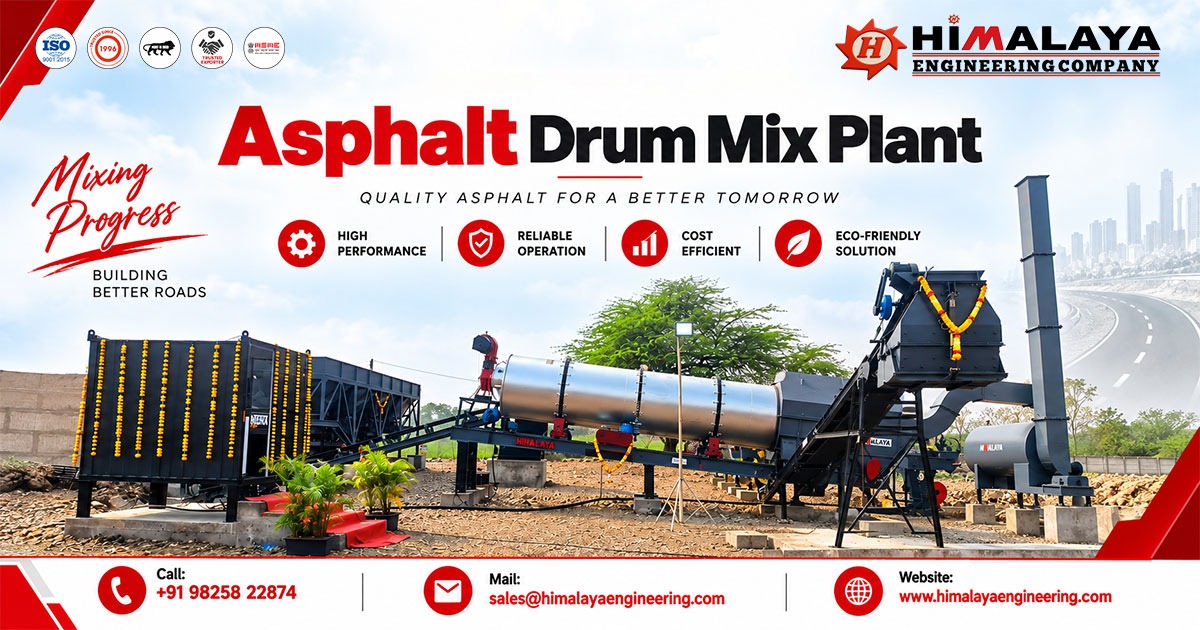
- Drum Mix Plant – Continuously dries, heats, and mixes aggregates with bitumen in a rotating drum.
Himalaya Engineering Company manufactures asphalt plant solutions designed for efficient production, reliable operation, and consistent mix quality.
How Does an Asphalt Plant Work?
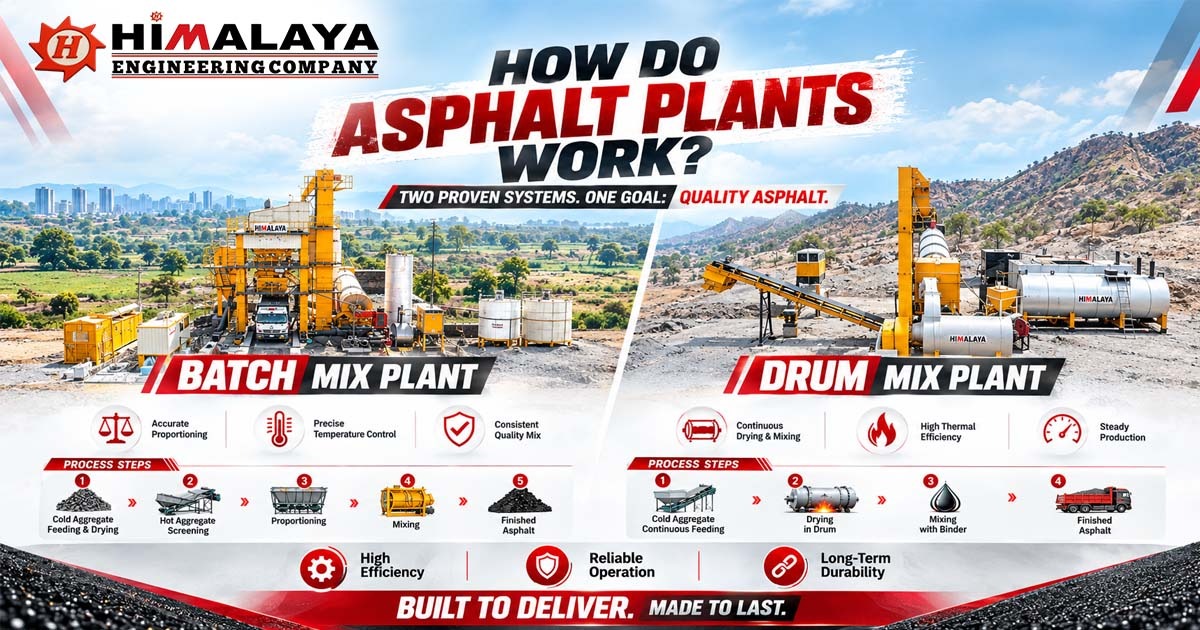
The working process differs slightly between batch and drum mix plants, but both systems follow the fundamental principle of aggregate preparation + heating + controlled mixing + finished asphalt discharge.
1. Cold Aggregate Feeding
The process begins with different sizes of cold aggregates stored in separate cold feed bins.
The feeder controls the quantity of material entering the conveyor system according to the required mix design.
Key functions:
- Stores different aggregate sizes
- Controls aggregate feeding
- Maintains continuous material flow
- Supports accurate production rates
2. Aggregate Conveying
The cold aggregates are transported from the feeder to the drying and heating section using belt conveyors.
Proper conveying ensures a continuous supply of material while minimizing interruptions in production.
3. Aggregate Drying and Heating
Moisture must be removed from aggregates before mixing them with bitumen.
A rotary drying drum uses controlled heat to:
- Remove moisture
- Increase aggregate temperature
- Prepare aggregates for mixing
- Improve bitumen coating
In drum mix plants, drying and mixing occur continuously inside the drum.
How Does a Batch Mix Asphalt Plant Work?
A batch mix asphalt plant produces asphalt in separate batches, allowing accurate control over aggregate proportions and mix composition.
Main Process
1. Cold aggregate feeding → 2. Drying and heating → 3. Screening → 4. Proportioning → 5. Mixing → 6. Finished asphalt discharge
Batch Mix Process Explained
Step 1: Cold Aggregate Feeding
Different aggregate sizes are fed from individual cold bins.
Step 2: Drying and Heating
Aggregates enter the dryer, where moisture is removed and the material is heated.
Step 3: Hot Aggregate Screening
Heated aggregates are lifted to the screening section and separated according to particle size.
Step 4: Accurate Proportioning
The required quantity of each aggregate fraction is weighed according to the selected mix design.
Step 5: Mixing With Bitumen
Aggregates, mineral filler, and controlled quantities of bitumen are combined inside the mixer.
Step 6: Finished Asphalt Discharge
The completed hot mix asphalt is discharged into a storage system or directly into transport vehicles.
Benefits of Batch Mix Plants
- Precise aggregate proportioning
- Accurate weighing
- Controlled mixing time
- Consistent asphalt quality
- Flexible mix designs
- Suitable for projects requiring different recipes
How Does a Drum Mix Asphalt Plant Work?
A drum mix asphalt plant is designed for continuous asphalt production. Aggregates are continuously fed into a rotating drum where drying, heating, and mixing take place.
Main Process
1. Cold aggregate feeding → 2. Continuous drying → 3. Heating → 4. Bitumen addition → 5. Continuous mixing → 6. Finished asphalt discharge
Drum Mix Process Explained
Step 1: Continuous Aggregate Feeding
Cold aggregates enter the system continuously through the feeding unit.
Step 2: Drying in the Drum
The aggregates move through a rotating drum while controlled heat removes moisture.
Step 3: Aggregate Heating
The material reaches the required temperature for effective bitumen coating.
Step 4: Bitumen Addition
A metered quantity of bitumen is introduced into the mixing zone.
Step 5: Continuous Mixing
Aggregates and bitumen are continuously mixed inside the drum to produce a homogeneous asphalt mixture.
Step 6: Finished Asphalt Discharge
The finished hot mix asphalt exits the system and is transferred for storage or transportation to the paving site.
Batch Mix Plant vs Drum Mix Plant
| Feature | Batch Mix Plant | Drum Mix Plant |
|---|---|---|
| Production method | Batch-wise | Continuous |
| Aggregate screening | Separate screening process | Generally integrated with continuous process |
| Mix control | Highly precise | Continuous controlled mixing |
| Mix flexibility | High | Suitable for continuous production |
| Mixing location | Separate pugmill | Inside rotating drum |
| Production requirement | Variable mix designs | Steady production |
| Typical advantage | Precise proportioning | Continuous operation |
The appropriate plant depends on production capacity, project requirements, mix design flexibility, fuel efficiency, and operating conditions.
Major Components of an Asphalt Plant
An asphalt plant generally consists of several integrated components:
1. Cold Aggregate Feeder
2. Conveyor System
3. Dryer Drum
4. Burner System
5. Hot Aggregate Elevator
6. Vibrating Screen
7. Weighing System
8. Mixing Unit
9. Bitumen Storage and Pumping System
10. Control Panel
11. Dust Collection System
12. Finished Asphalt Storage
Why Temperature Control Matters in Asphalt Production
Temperature plays a critical role in asphalt manufacturing. Aggregates must reach an appropriate temperature for effective drying and coating, while bitumen needs controlled heating for proper mixing.
Effective temperature control helps support:
- Proper aggregate drying
- Consistent bitumen coating
- Stable mix quality
- Efficient fuel utilization
- Reliable plant operation
Excessive or inadequate heating can affect production efficiency and asphalt mix performance, so automated monitoring and controlled heating are important.
Advantages of Modern Asphalt Plants
Modern asphalt plants are engineered to provide controlled and efficient asphalt production.
Key Advantages Include
- Accurate material proportioning
- Consistent mix quality
- Efficient aggregate heating
- Controlled bitumen addition
- Reliable continuous or batch production
- Reduced material wastage
- Improved operational monitoring
- Robust industrial construction
- Suitable for infrastructure projects
- Better production efficiency
Applications of Asphalt Plants
Asphalt produced by these plants is commonly used for:
- Highway construction
- Road development
- Urban roads
- Airport runways
- Industrial roads
- Rural road projects
- Parking areas
- Bridge approaches
- Infrastructure development
- Road maintenance and resurfacing
Frequently Asked Questions
Q1: What Does an Asphalt Plant Do?
A1: An asphalt plant heats, dries, proportions, and mixes aggregates with bitumen to produce hot mix asphalt.
Q2: What Are the Main Types of Asphalt Plants?
A2: The two common types are batch mix plants and drum mix plants.
Q3: How Does a Batch Mix Plant Work?
A3: It heats and screens aggregates, weighs them according to the mix design, and mixes them with bitumen batch by batch.
Q4: How Does a Drum Mix Plant Work?
A4: A drum mix plant continuously dries, heats, and mixes aggregates with bitumen inside a rotating drum.
Q5: Why Is Aggregate Heating Necessary?
A5: Heating removes moisture and prepares aggregates for effective mixing and coating with bitumen.
Himalaya Engineering Company focuses on asphalt plant solutions engineered for efficient production, consistent quality, reliable operation, and long-term industrial performance.
Choose Himalaya Engineering Company for reliable asphalt plants engineered for efficient production and consistent road construction quality.
Phone No: +91 9825822874
Email Id: sales@himalayaengineering.com
Website: www.himalayaengineering.com
View Product: Click here