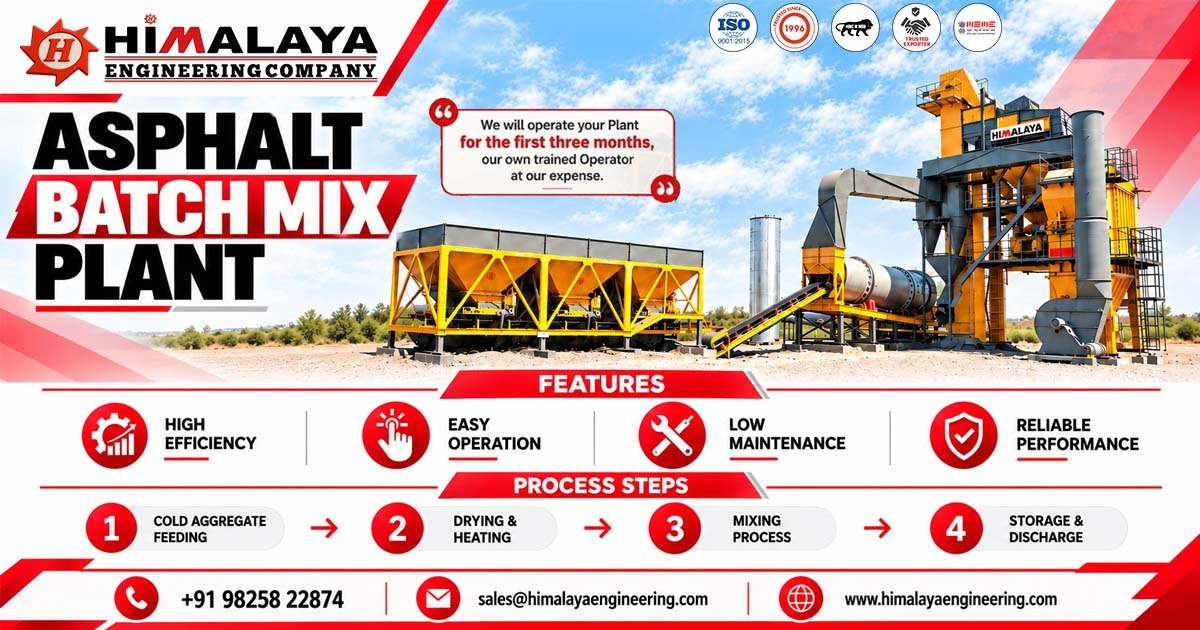
An asphalt batch mix plant produces high-quality hot mix asphalt by accurately heating, screening, weighing, and blending aggregates with bitumen and filler.
For road contractors and infrastructure developers, the right plant helps maintain consistent mix quality, production efficiency, and project timelines.
An asphalt batch mix plant is a controlled production system designed to manufacture asphalt mixtures in individual batches.
Functions
Aggregate Feeding
Stores and feeds different aggregate sizes through separate cold-feed bins.
Aggregate Drying
Removes moisture and heats aggregates inside a rotary dryer.
Dust Collection
Captures fine particles generated during drying and heating.
Screening
Separates heated aggregates into precise size fractions.
Hot Aggregate Storage
Holds screened materials before accurate weighing.
Weighing
Measures aggregates, mineral filler, and bitumen according to the selected mix design.
Mixing
Combines all ingredients thoroughly in a pugmill mixer.
Discharge
Transfers the finished asphalt mix to trucks for transportation to the paving site.
How an Asphalt Batch Plant Works
The production process follows a systematic sequence to achieve uniform asphalt quality.
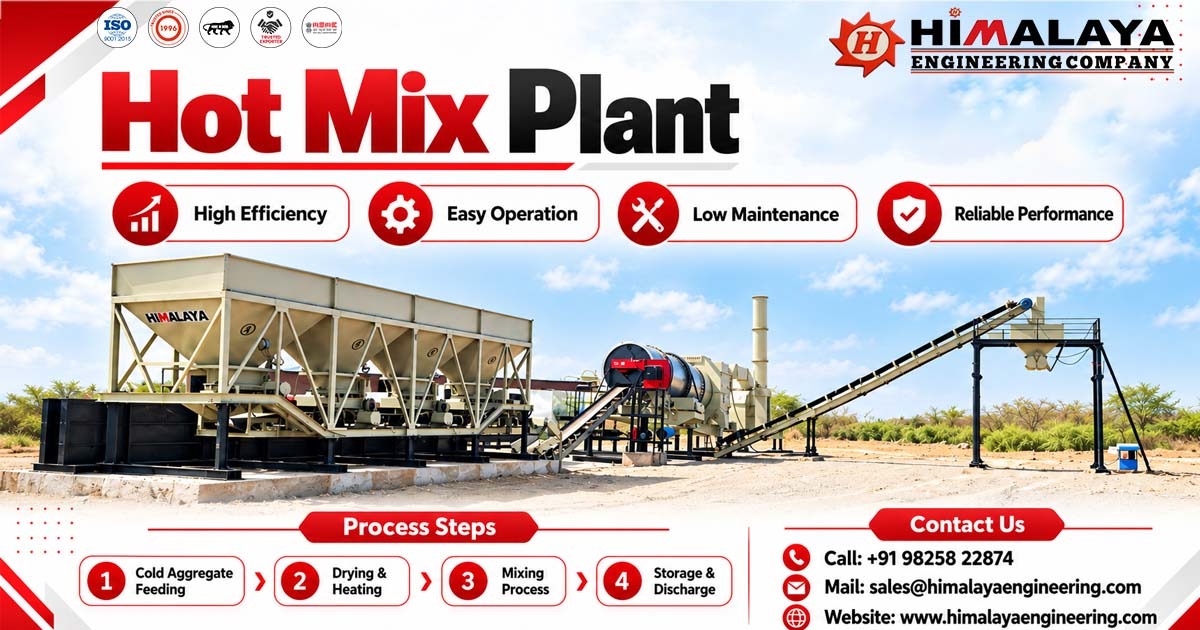
1. Cold Aggregate Feeding
Different aggregate sizes enter separate bins. Variable-speed feeders regulate material flow according to the required production rate and mix recipe.
2. Drying and Heating
A rotary drum heats aggregates while removing moisture. Proper temperature control improves drying efficiency and prepares aggregates for effective bitumen coating.
3. Screening and Separation
The heated aggregates pass through vibrating screens, which classify them into required sizes. This step helps maintain accurate gradation.
4. Precise Weighing
Each aggregate fraction is weighed according to the selected recipe. The plant also measures filler and bitumen to maintain the required mix proportions.
5. Mixing
The weighed materials enter the pugmill, where aggregates, mineral filler, and bitumen blend into a homogeneous asphalt mixture.
6. Finished Mix Discharge
After mixing, the completed batch moves into a storage silo or directly into an asphalt truck for transportation to the construction site.
Why Asphalt Batch Mix Plants Matter for Infrastructure
Reliable asphalt production directly affects road quality, construction productivity, and long-term pavement performance.
Consistent Mix Quality
Automated weighing and controlled mixing help produce batches with repeatable composition and temperature.
Flexible Mix Production
Contractors can change recipes between batches, making batch plants suitable for different pavement specifications and project requirements.
Better Aggregate Control
Screening and individual weighing provide greater control over aggregate gradation compared with less flexible production methods.
Efficient Material Management
Controlled feeding, weighing, and batching help reduce unnecessary material consumption and improve production planning.
Suitable for Infrastructure Projects
Asphalt batch mix plants support applications such as:
- Highway construction
- Expressways
- Urban roads
- Airport runways
- Industrial roads
- Bridges and approach roads
- Road rehabilitation projects
- Municipal infrastructure
Choosing the Right Asphalt Batch Mix Plant
Selecting a plant requires more than checking its rated capacity. Contractors should evaluate the complete production requirement.
Important Selection Factors
- Production Capacity: Match TPH capacity with project demand and paving requirements.
- Mix Specifications: Ensure the plant can produce the required asphalt recipes.
- Aggregate Configuration: Consider the number of aggregate fractions needed.
- Fuel Efficiency: Evaluate burner performance and thermal efficiency.
- Automation: Choose suitable control and monitoring systems for accurate production.
- Storage Capacity: Consider hot-mix and filler storage requirements.
- Installation Requirements: Review foundation, electrical, fuel, and site requirements.
- Maintenance Support: Check spare-part availability and technical service.
- Future Expansion: Consider whether production capacity can accommodate future projects.
Maintenance That Keeps Your Asphalt Plant Running
Regular maintenance protects production consistency and reduces unexpected downtime.
Essential Maintenance Practices
- Inspect cold-feed bins and feeders regularly.
- Clean dryer flights and inspect the drum for wear.
- Check burner performance and fuel systems.
- Inspect vibrating screens for damage or excessive wear.
- Monitor conveyor belts, rollers, and bearings.
- Check bitumen pumps, valves, and pipelines.
- Clean dust collection systems and inspect filters.
- Calibrate weighing systems periodically.
- Inspect pugmill paddles and liners for wear.
- Review electrical panels, sensors, and automation systems.
- Maintain proper lubrication schedules for moving components.
Why Choose Himalaya Engineering Company?
Himalaya Engineering Company focuses on practical asphalt plant solutions designed around production requirements, operational reliability, and project-specific applications.
Key Advantages
- Engineering-focused plant solutions
- Production-oriented configuration
- Reliable material handling
- Controlled aggregate and bitumen batching
- Practical automation options
- Maintenance-focused design considerations
- Suitable solutions for infrastructure contractors and road developers
Frequently Asked Questions
Q1: What is an asphalt batch mix plant?
A1: It is a plant that produces hot mix asphalt in controlled batches by heating, screening, weighing, and mixing materials.
Q2: How does an asphalt batch plant work?
A2: It feeds, dries, heats, screens, weighs, and mixes aggregates with bitumen before discharging the finished asphalt.
Q3: What materials are used in an asphalt batch plant?
A3: Typical materials include aggregates, bitumen, mineral filler, and other approved additives based on the mix design.
Q4: What affects asphalt batch plant production capacity?
A4: Plant configuration, aggregate moisture, burner efficiency, mixing cycle, material characteristics, and operating conditions influence output.
Q5: Why is aggregate screening important?
A5: Screening separates heated aggregates into controlled sizes, helping maintain the required gradation and asphalt mix consistency.
Q6: How can asphalt plant downtime be reduced?
A6: Preventive maintenance, regular calibration, timely component inspection, proper cleaning, and planned spare-parts management help reduce downtime.
Asphalt Batch Mix Plants in Uttar Pradesh
We supply asphalt batch mix plants in Uttar Pradesh, including the following locations: Kanpur, Lucknow, Ghaziabad, Agra, Meerut, Varanasi, Prayagraj, Bareilly, Aligarh, Moradabad, Saharanpur, Gorakhpur, Noida, Firozabad, Jhansi, Muzaffarnagar, Mathura-Vrindavan, Ayodhya, Rampur, Shahjahanpur, Farrukhabad-Fatehgarh, Budaun, Maunath Bhanjan, Hapur, Etawah, Mirzapur-Vindhyachal, Bulandshahr, Sambhal, Amroha, Hardoi, Fatehpur, Raebareli, Orai, Sitapur, Bahraich, Modinagar, Unnao, Jaunpur, Lakhimpur, Hathras, Banda, Pilibhit, Barabanki, Khurja, Gonda, Mainpuri, Lalitpur, Etah, Deoria, Ghazipur, Sultanpur, Azamgarh, Bijnor, Sahaswan, Basti, Chandausi, Akbarpur, Ballia, Tanda, Greater Noida, Shikohabad, Shamli, Awagarh, Kasganj.
Choose Himalaya Engineering Company
Choose Himalaya Engineering Company for dependable asphalt batch mix solutions engineered for efficient, consistent road construction performance.
Phone No: +91 9825822874
Email: sales@himalayaengineering.com
Website: www.himalayaengineering.com
View Product: Click here